Showing posts with label Tame Garden. Show all posts

Wednesday, March 31, 2010

Yesterday and Today


This is yesterday's plant marker.

This is today's plant marker. We are adding a few markers around the site, native plants and Gene's original plants. When you visit, tell us what you think of them.
Yesterday, water was not singing in Singing Waters. Today it is.

Yesterday the rue was not blooming.

Today the large bed of rue between the Cabin and boardwalk is starting to bloom.


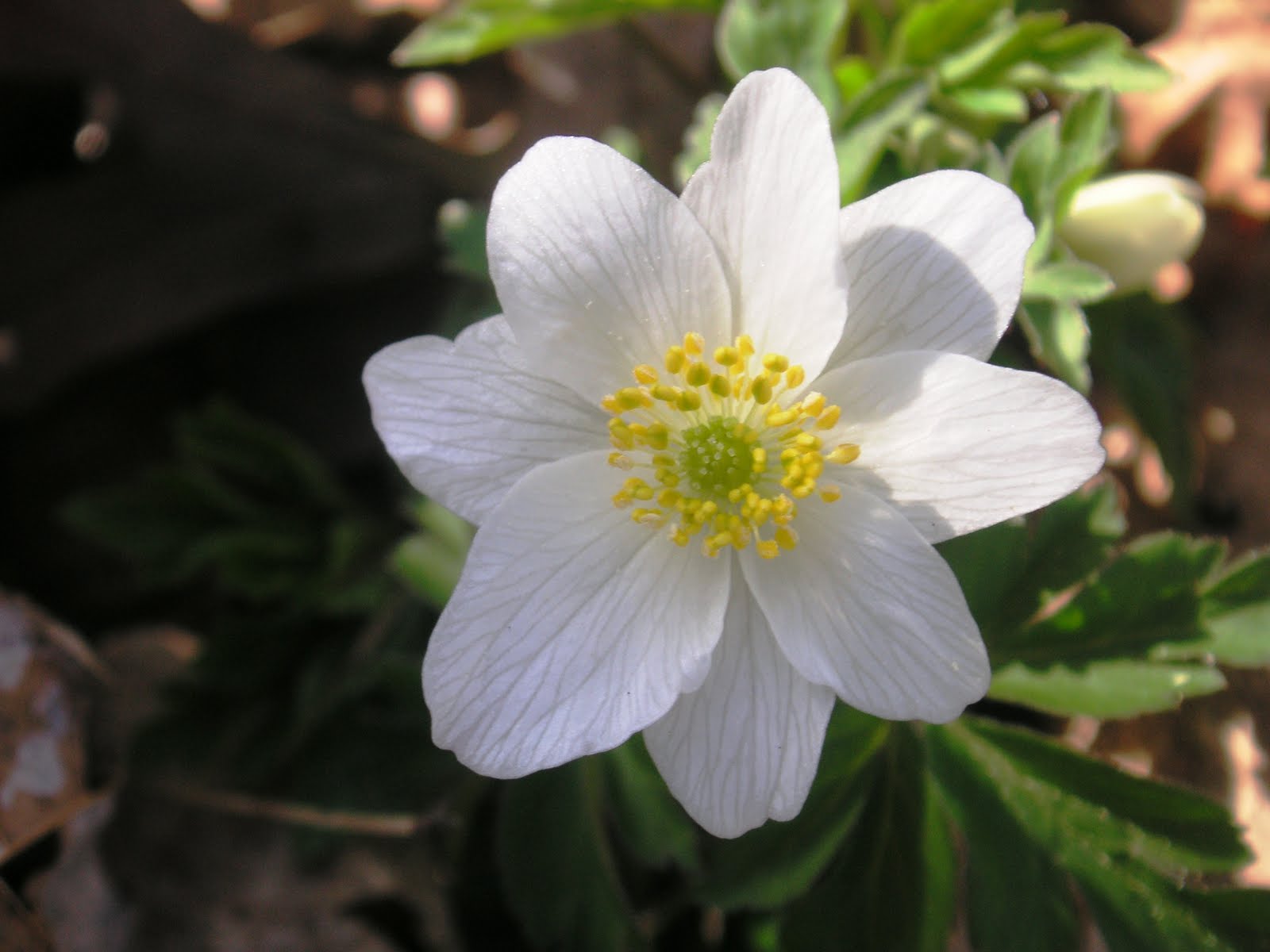
Yesterday the hepatica started to bloom. Today it is in its full glory.

Come visit and then come back again. You will be surprised by the changes.

Monday, November 16, 2009

Post-Freeze Garden Blooms

Can you believe there are still blooms in the Tame Garden? Recent visitors have commented on the nasturtiums, snapdragons, hydrangea (pink and blue), toad lily, calendula, profusion zinnias, gaillardia and geraniums. We have had several hard freezes, but the garden is situated so that a lot of the plants are spared.

Monday, August 10, 2009

The bees LOVE these! there were 10 or so swarming around within arm's length when I shot this. sorry kids, I'm not an entymologist nor horticulturist, so I can't tell you much more...


Photos courtesy www.aceofimages.com

Can't wait for Chautauqua this weekend!

Tuesday, August 4, 2009

Phlox paniculata

Under the Arbor is the column I write for the Gene Stratton-Porter Memorial Society's newsletter. Here is the latest article on phlox.

Enjoy the sweet perfume of clusters of white, pink or purple blossoms as you stroll through the western beds of the tame garden from mid-summer through fall. You may notice a tiger swallowtail or hummingbird on one of the blossoms. What is that plant? It is a native plant, an heirloom plant, and one of Gene’s original plants in her Tame Garden. It is Phlox paniculata, commonly called garden phlox, summer phlox, fall phlox or tall phlox, and its popularity in modern gardens is increasing.

Native Plant

There are more than sixty species of phlox. All are North American natives except one found in Siberia. The wild form of Phlox paniculata is native from New York to Georgia and west to Arkansas and Illinois. It occurs on rich, moist soils along stream banks and in open woods. The great naturalist and plant explorer John Bartram sent Phlox paniculata to England in the early 1700s. Their showy, fragrant flowers quickly became a hit throughout Europe and by the mid 1800s they were available in the nursery trade. They didn't re-cross the Atlantic until Victorian times.

Heirloom Plant

The native phlox, bred in England for a wide range of flower colors, improved habit, and increased resistance to diseases, quickly became a favorite garden plant in its native land and you can find it in many old gardens. (See picture of Gene’s garden.) It also held the romantic meaning of "our souls are united."


Pollinators

The interdependence between plants and pollinators, such as butterflies, moths, bees and hummingbirds, is mutually beneficial. A pollinated plant is able to reproduce and the pollinator has a food source. Phlox paniculata is a nectar source for the black swallowtail and zebra swallowtail, but its lure isn’t restricted to daytime pollinators. A Hawkmoth may hover next to its blossoms from late afternoon to dusk; in fact, phlox is listed as an adult nectar source. In the evening, as the sweet scent of phlox drifts across the garden, night moths may be drawn to the flowers, especially those with white blossoms.

Phlox in Your Garden

Phlox paniculata provides great garden color and fragrance from July through September, filling that gap between the bounty of the early summer bloomers and the fall bloomers. It is often called "the backbone of the summer border" by landscape designers. It can be used in a formal garden, a cottage garden or in a naturalized design.

Phlox are excellent cut flowers with a long vase life. Many of the smaller cultivars make nice container or patio pots.

There are hundreds of cultivars hybridized and selected for flower color, size and fragrance. The plant height when blooming varies widely by the cultivar and ranges from 15 to 48 inches.

Phlox paniculata is not a perfect plant. Powdery mildew is often a problem. The mildew can be reduced if you plant so there is good air circulation, if the plants are not crowded, and if you water in the early morning so the foliage can dry. Many new cultivars claim resistance to powdery mildew, but several studies have shown some heirloom cultivars have better resistance.

We often have Phlox paniculata for sale on the plant rack near the Carriage House. Why don’t you take one of “Gene’s plants” home and try it in your garden?
Wednesday, April 8, 2009

Cornelian Cherry behind Garden Shed


Here's a full-length shot of the Cornelian Cherry, Cornus mascula, in full bloom.

Photo taken 4/8/09.

Cornelian Cherry


The cornelian cherry, Cornus mascula, is in full bloom, awaiting the warm weather and pollinators.


Photo taken 4/8/09


Saturday, September 6, 2008

Late August Garden

I just gave two visitors from Wisconsin a tour of the Cabin and gardens, and they asked about this blog! I'm glad it inspired someone to visit, as they passed through this area on the way to the renowned genealogical library in Fort Wayne. Of course, they assumed nothing was in bloom because I haven't posted for a while (not really).

This garden totally amazes me sometimes. We have not had rain for weeks and it has been hot. Most gardens are bedraggled, but this garden still looks great. Pumping lake water through the irrigation system several times a week helps, but so does the use of Indiana native plants and heirloom annuals.

Last week we were visited by Kathi, marketing maven from our head office in Indianapolis. She posted several pictures and some information about Gene on her blog. Here's a sample.


Sunday, August 10, 2008

Garden Tours during Chautauqua Days

Gene Stratton met Charles Porter on Sylvan Lake during a Chautauqua. Every summer we celebrate Gene's birthday during Chautauqua Days, as celebrated by the town of Rome City. This Saturday and Sunday afternoon, I will be in the garden to give informal tours and there will be free birthday cake in the Vistors Center. Cabin tours will be available for a nominal fee.


Last Friday, I took a picture of the east garden from the attic of the Cabin. I like the photo because you can see the layout of the garden. The unfinished area in the foreground is where we are preparing to plant a shrub hedge. Gene planted over 400 shrubs around her Tame Garden.


This picture is the west gardens. There are two symmetrical gardens on the west side. These photos don't do the garden justice, so come see the garden for yourself!


Wednesday, October 3, 2007

Summer's End

Recently I sat at the picnic table at the north entry to the garden to make some garden notes and glanced up to see the grass and snapdragons in Bed 8 framed by the arbor and Tara Vine.


We have quite a selection of Arisaema or Jack-in-the-Pulpits (or is the plural Jacks-in-the-Pulpit?). The fruits are a cheerful cluster of bright red shiny berries. I collected one seed pod and planted the seeds in the nursery bed behind the Garden Shed to see how easy they are to cultivate. I've read that it will take 3 to 5 years to bloom.


The Jerusalem artichoke soars above all other plants, but this stately amaranthus is trying to hold its own.


We turned the compost and the bin in the foreground of the picture will be ready to use next spring. The middle bin is heating up nicely and may also be ready for spring. In the large bin at the end, we are accumulating the detritus from fall clean-up and waiting for the massive amount of leaves that will soon be available.

Thursday, August 9, 2007

Before and After

In April, we took all the plants out of this bed and attempted to remove the Star of Bethlehem invasive bulbs. Here's what it looked like then and now it's in full bloom. There is an old saying, which I have found to be true:
The first year they sleep.
The second year they creep.
And the third year they leap.
If these plants are sleeping now, I can't imagine what they will look like in two more years.


The "before" of this bed can be seen in the foreground and on the left. Last year, my husband constructed a three-bin compost pile at the site and this is the first batch finished. You can't believe how excited I was over the compost! I'm a firm believer that there is nothing better for a garden than compost (and plenty of water).


Here's a picture from last May, taken under the arbor, showing the dripping wisteria.


And a few months later, from the same angle, instead of bloom I see the seed pod.

Which is brighter, the filtered sunlight or the edges of this wisteria pod?

Friday, July 13, 2007

Hot and Cool

When the crocosmia is blooming, every visitor stops and asks about it. It is really a showstopper. I think it is large enough to divide, as there is room for a large drift of these hotties.


Another hot plant in the garden now is the gallardia.


Is this hot or cold? I love the blue and yellow combination. There are quite a few balloon flowers in the garden but I like this combination planting the best.


And the coolest plant of all now blooming? Globe thistle. An Amish women asked me why in the world I had a large thistle in the garden. I explained about globe thistle but she insisted that no thistle would ever be in her garden.

Daylilies


The daylilies are blooming. While there are a lot of daylilies in the garden, there is little variety. There is a rather large overgrown daylily bed with only two varieties; one variety is pictured in the middle and the other is a soft peach. One of our goals is to expand the collection of daylily cultivars with a longer bloom season in a reworked daylily bed.

Nonetheless, these are beautiful and add a lot to the garden mid-summer.

Milkweeds

There are three genera of milkweeds in the gardens. This is the swamp milkweed (Asclepias incarnata), but it is growing well in a sunny dry location. Perhaps that is why it is over 5 feet when the reference books say it is 1-4' in height. The juice is less milky and it is less fragrant than the common milkweed.


This is butterfly weed (Asclepias tuberosa), which attracts many butterflies with its showy bloom and is a favorite of Monarchs. When you visit, see if you can find the caterpillars on the plants.


As I was looking up the botanical names, I found this little factoid about the milkweed family (Asclepiadaceae): "The unusual structure of the flower regulates pollination. Sacs of pollen snag on insects' legs, are pulled from the stamens and then must be precisely inserted in slits behind the crown. If inserted backwards, pollen grains germinate in the wrong direction and are wasted. This may explain why so few pods occur on most plants. Insects too small to pull free die trapped on the flower." (The Audubon Society Field Guide to North American Wildflowers--Eastern Region)

Wednesday, June 6, 2007

Orange and pink or pink and orange?

Blooming next to the cabin is a beautiful orange honeysuckle (above) and on the south end of the garden is a pink honeysuckle (below). I call the pink one Ron's honeysuckle, since my teenage son transplanted it from the driveway at the farmhouse in the middle of summer last year. It was growing poorly but I wasn't sure it would survive being moved. It is thriving.
So which one do you like best? The primarily orange bloom with hints of pink or the primarily pink one with hints of orange?

Wednesday, May 30, 2007

A Fragrant Garden

The garden has been so fragrant all week long. First it was the fringe tree with its citrus smell and now it is the mock oranges in full bloom.

CORRECTION: It is the Tara vine on the arbor entrance that is wafting an intoxicating fragrance across the garden. Gene called it a Tara Vine, but today's more common name for Actinidia arguta is hardy kiwi.

Friday, May 11, 2007

Wisteria

The wisteria vines are just starting to bloom along the central arbor in the Tame Garden. These are original plants; that is, these are the actual vines that Gene planted. Mother's Day or the following weekend may be good times to visit, depending on how the weather affects the blooms. The number of blooms vary each season and I'm still trying to figure out the factors. I think milder winters and good spring rains produce more blooms.

On the Star of Bethlehem front, I spent my time today cleaning just one end of the culinary herb bed of these bulbs so I could plant basil seed. Carol continued digging the bulbs out of the wisteria roots and from the rocks lining the inside of the arbor. These are just skirmishes in the 80-year war.

Thursday, May 10, 2007

What do these pictures have in common?


The bearded irises are just starting to bloom.


The shade garden in bed 18 is starting to fill out.


Twin-leaf leaves (and that is not redundant) have appeared. They look like they are ready to flutter away or adorn a nicely wrapped Mother's Day gift.

So what do these pictures have in common other than they were all taken today in the Tame Garden at the Gene Stratton-Porter Historic site?

The beautiful flower of the Star of Bethlehem is in each of them. The iris photo best illustrated the condition of the garden today. The S. of B. are blooming like crazy while the foliage is starting to yellow and die. That means the prime digging time is over and soon no one will know that a few inches beneath the soil lies millions of tiny bulbs, gulping up oxygen in the soil, taking room, competing with the garden plants.

Sunday, April 22, 2007

Garden Work Day

The garden volunteers are called Garden Porters and yesterday was our first work day of the season. For most, it was the first hands-on encounter with the Star of Bethlehem invaders. They were shocked at the extent of the problem even through they knew there was an issue. The bulbs are so bad, there is no way to plant seeds or even plants in the spring.

Our goal was to renovate the large round bed (focal point) of the lower west garden. Twelve hard-working experienced gardeners working full-tilt for over three hours managed to remove plants and the SoB bulbs from only half of the bed. We did replant Lady's Mantle around the edge. The plants removed are ensconced in the nursery bed plus two wheelbarrows.

Guess what I'm working on next week?