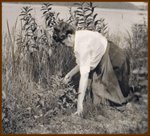
 The bees LOVE these! there were 10 or so swarming around within arm's length when I shot this. sorry kids, I'm not an entymologist nor horticulturist, so I can't tell you much more...
Monday, August 10, 2009


shots from July


can't wait for Chautauqua this weekend!!! til then, here's some shots from July around sunset.
Photos courtesy www.aceofimages.com
Tuesday, August 4, 2009
Phlox paniculata
Under the Arbor is the column I write for the Gene Stratton-Porter Memorial Society's newsletter. Here is the latest article on phlox.
Enjoy the sweet perfume of clusters of white, pink or purple blossoms as you stroll through the western beds of the tame garden from mid-summer through fall. You may notice a tiger swallowtail or hummingbird on one of the blossoms. What is that plant? It is a native plant, an heirloom plant, and one of Gene’s original plants in her Tame Garden. It is Phlox paniculata, commonly called garden phlox, summer phlox, fall phlox or tall phlox, and its popularity in modern gardens is increasing.
Native Plant
There are more than sixty species of phlox. All are North American natives except one found in Siberia. The wild form of Phlox paniculata is native from New York to Georgia and west to Arkansas and Illinois. It occurs on rich, moist soils along stream banks and in open woods. The great naturalist and plant explorer John Bartram sent Phlox paniculata to England in the early 1700s. Their showy, fragrant flowers quickly became a hit throughout Europe and by the mid 1800s they were available in the nursery trade. They didn't re-cross the Atlantic until Victorian times.
Heirloom Plant
The native phlox, bred in England for a wide range of flower colors, improved habit, and increased resistance to diseases, quickly became a favorite garden plant in its native land and you can find it in many old gardens. (See picture of Gene’s garden.) It also held the romantic meaning of "our souls are united."
Pollinators
The interdependence between plants and pollinators, such as butterflies, moths, bees and hummingbirds, is mutually beneficial. A pollinated plant is able to reproduce and the pollinator has a food source. Phlox paniculata is a nectar source for the black swallowtail and zebra swallowtail, but its lure isn’t restricted to daytime pollinators. A Hawkmoth may hover next to its blossoms from late afternoon to dusk; in fact, phlox is listed as an adult nectar source. In the evening, as the sweet scent of phlox drifts across the garden, night moths may be drawn to the flowers, especially those with white blossoms.
Phlox in Your Garden
Phlox paniculata provides great garden color and fragrance from July through September, filling that gap between the bounty of the early summer bloomers and the fall bloomers. It is often called "the backbone of the summer border" by landscape designers. It can be used in a formal garden, a cottage garden or in a naturalized design.
Phlox are excellent cut flowers with a long vase life. Many of the smaller cultivars make nice container or patio pots.
There are hundreds of cultivars hybridized and selected for flower color, size and fragrance. The plant height when blooming varies widely by the cultivar and ranges from 15 to 48 inches.
Phlox paniculata is not a perfect plant. Powdery mildew is often a problem. The mildew can be reduced if you plant so there is good air circulation, if the plants are not crowded, and if you water in the early morning so the foliage can dry. Many new cultivars claim resistance to powdery mildew, but several studies have shown some heirloom cultivars have better resistance.
We often have Phlox paniculata for sale on the plant rack near the Carriage House. Why don’t you take one of “Gene’s plants” home and try it in your garden?
Thursday, July 9, 2009
June 2009 Mother Daughter Tea
June brought gorgeous days at the Gene Stratton Porter Site and, as a newcomer to the area, a chance to take my first tour of Gene's home on Lake Sylvan. Visitors (including a few gentlemen!) motored in from neighboring counties to attend the Sunday Mother and Daughter Tea on the 7th.
While final preparations were being made for the main event, I slipped into both guest tours of Gene's home. Upon first entrance I found myself surrounded by gorgeous woodwork with the owner's intials expertly worked into the dark wood's design. Having grown up in a turn of the century home in Sherwood, OH, I expected the typical cream and dark wood color schemes
While final preparations were being made for the main event, I slipped into both guest tours of Gene's home. Upon first entrance I found myself surrounded by gorgeous woodwork with the owner's intials expertly worked into the dark wood's design. Having grown up in a turn of the century home in Sherwood, OH, I expected the typical cream and dark wood color schemes
 but was very impressed by how she really did build this home as she saw fit and in accordance with her vision of the perfect lake home. Our guide pointed out the many amenitites included in the
 house that we present day take for granted but that Gene insisted upon...and received. From the icebox tucked conveniently yet out of the way in the far southwest corner of the kitchen, to the famed bay window with the "million dollar view" of Lake Sylvan (and a darkroom- yay!), the cabin's design is a testament to Gene's impecable sense for blending the pragmatic with artistry. Of course, anxious youngsters in attendance enjoyed the room containing the nature collection the most, while we old and dusty adults wishfully awed at the walls of elongated windows sagged with age but still stunningly showcasing a relaxing view of the gardens. After everyone
  had gotten comfortably used to each other and allowed themselves to look around and take in the elegant subtleties of Gene's design, our tour came to a close; all filed out eagerly to head up to the visitor's center for the main event.
Ascending to the top floor of the visitors' center, guests were greeted by Victorian era melodies courtesy of Indiana's own Weather Girls. With Nancy Blough (founder of the Northeast Indiana Folk Music and Instrument Gathering, Inc.) strumming a mountain dulcimer while Lois Loucks provided accompaniment on autoharp, participants found their place cards and settled in for an afternoon of turn of the century food and entertainment.
In a true Victorian tea atmosphere complete with a cute little table reserved and already occupied by teddy bears and dollies among the decor, some of the nicest Hoosiers I have met to date began serving mint garnished tea and delicacies onto eclectic, but oh so charmingly ornate, china.
And the food!!!!!! The pictures should speak for themselves...it was art and, if you can fathom, it's presentation to one's tastebuds was even greater than to the eye. Bravo volunteers!


Guest speakers, jokes, and audience members joining the Weather Girls for a few numbers rounded out the afternoon. Finally, guests with bellies full and faces smiling parted ways taking fond memories home, perhaps anticipating next year ...or at least the Autumn Tea.

(Be sure to your spot this fall for the noon, Monday, October 19th festivities!)
-Alaina Carnahan, blogger/photographer/volunteer
Photos courtesy www.aceofimages.com
Friday, May 15, 2009
Fierce Defenders of Territory
As I was walking through the arbor in the garden this week, two male Baltimore orioles flew through the arbor and landed in a shrub in the garden border, fighting verbally and physically. From this I deduce that the garden is included in a mated oriole's territory. I have heard their song but this is the first time I saw an oriole this year.
Thursday, April 9, 2009
Spotted Salamander

Here's a very camera shy spotted salamander, Ambystoma maculatum, found near a vernal pool. These are believed to be able to live 20 to 30 years.
Photo taken 4/9/09
Ohio Buckeye

One of the first trees to leaf out at GSP is the Ohio Buckeye, Aesculus glabra. The leaves are a beautiful maroon color!
Photo taken on 4/9/09
Wednesday, April 8, 2009
Redback Salamander

The redback salamander, Plethodon cinereus, may be found at the Gene Stratton-Porter State Historic Site in abundance. According to one website, they are the most common vertebrate in most woodland areas.
An immature dogtooth violet leaf, Erythronium americanum, is immediately to the right.
Photo taken 4/8/09.
Scilla in a Sea of Star of Bethlehem

Scilla awash in Star of Bethlehem, Ornithogalum umbellatum, foliage.
Photo taken 4/8/09.
Scilla on Waterleaf

A Scilla, Scilla siberica, blossom on Large-Leaved Waterleaf, Hydrophyllum macrophyllum.
Photo taken 4/8/09.


Cornelian Cherry

The cornelian cherry, Cornus mascula, is in full bloom, awaiting the warm weather and pollinators.
Photo taken 4/8/09
Hepatica by Lake Sylvan

Two days after several inches of snow and an evening dipping into the mid 20's, many of round-lobed hepatica, Hepatica nobilis, were in bloom.
Photo taken 4/8/09
Tuesday, April 7, 2009
Bobcats in the Woods?

Here are a few possible bobcat prints found in Sower's Woods immediately adjacent to the Gene Stratton-Porter State Historic Site
Prints & Photo taken by Ed Cable, Site Naturalist, on 4/4/09
Coltsfoot

Here are two Coltsfoot blooms, Tussilago farfara, appearing near the boardwalk even before the skunk cabbage had popped up!
Photo taken on 3/12/09
Skunk Cabbage

Skunk Cabbage, Symplocarpus foetidus, near the Gene Stratton-Porter Spring and Surround.
Photo taken on 3/26/09
Scilla in Bloom

Here's an earlybird example of Scilla, Scilla siberica, just before the blooms opened. It may be found in many areas of the site near road and path edges.
Photo taken on 3/26/09.
Sunday, November 2, 2008
The Boardwalk
As part of making the site handicapped accessible, a boardwalk was installed along the lake, from the pudding stone spring on the east to the dock on the west. Several benches along the walk provide places to view Boy Scout Island, to watch the wrens, to read a book or to eat your lunch.

I'm working with the site naturalist to add native plants along the walk so visitors can see the wildflowers in Wildflower Woods up close. There is quite a fall display. Near the spring and the seep is a large stand of rather rare pink turtlehead or Chelone obliqua speciosa. Because these plants require consistent moist soil, the loss in the wild is due to wetland habitat destruction. I'm planning to dig a few starts from the edges and add more along the walk.

Gene had a special fondness for fringed gentians. Judith Long in her biography of Gene Stratton-Porter writes:
As part of a development-related rescue effort, four fringed gentian plants were donated this fall. They settled in happily next to the turtleheads even though they were in full bloom. I am pleased that they have set seed now.

Next to the fringed gentians and across the boardwalk is a large planting of first year Cardinal flower (Lobelia cardinalis), which I started from seed last spring. Next fall, I hope there are large stalks of bright red flowers. I received seven great blue lobelia plants (Lobelia siphilitica) last spring as part of the construction project and planted them next to the Cardinal flower. They bloomed and reseeded this fall.

There were already lots of other fall-blooming wildflowers along the boardwalk, such as Joe-Pye weed, jewel weed, milkweed, small shade goldenrod and asters. Here are some pictures I posted last spring of wildflowers in this area. We will continue to add native plants as we have them available and to remove non-native invasive plants such as lily of the valley and vinca.
Come enjoy the boardwalk. Bring your wildflower and bird guides, binoculars and lunch. Of course, if you want to volunteer in restoring this area of Wildflower Woods, just let me know!

I'm working with the site naturalist to add native plants along the walk so visitors can see the wildflowers in Wildflower Woods up close. There is quite a fall display. Near the spring and the seep is a large stand of rather rare pink turtlehead or Chelone obliqua speciosa. Because these plants require consistent moist soil, the loss in the wild is due to wetland habitat destruction. I'm planning to dig a few starts from the edges and add more along the walk.

Gene had a special fondness for fringed gentians. Judith Long in her biography of Gene Stratton-Porter writes:
"During her plant hunting expeditions, Gene Stratton-Porter was always on the lookout for rarities. She was especially interested in finding a fringed gentian, a dainty violet-blue wildflower that blooms in late summer."
As part of a development-related rescue effort, four fringed gentian plants were donated this fall. They settled in happily next to the turtleheads even though they were in full bloom. I am pleased that they have set seed now.

Next to the fringed gentians and across the boardwalk is a large planting of first year Cardinal flower (Lobelia cardinalis), which I started from seed last spring. Next fall, I hope there are large stalks of bright red flowers. I received seven great blue lobelia plants (Lobelia siphilitica) last spring as part of the construction project and planted them next to the Cardinal flower. They bloomed and reseeded this fall.

There were already lots of other fall-blooming wildflowers along the boardwalk, such as Joe-Pye weed, jewel weed, milkweed, small shade goldenrod and asters. Here are some pictures I posted last spring of wildflowers in this area. We will continue to add native plants as we have them available and to remove non-native invasive plants such as lily of the valley and vinca.
Come enjoy the boardwalk. Bring your wildflower and bird guides, binoculars and lunch. Of course, if you want to volunteer in restoring this area of Wildflower Woods, just let me know!
Monday, September 8, 2008
Dedication of Camp Big Island
Here's a nice article in the Sunday Journal Gazette about Camp Big Island or, as the locals call it, Boy Scout Island. It is directly across a small inlet from the site and can be seen from the window in the parlor, which Gene called her "million-dollar window" because of the view. You can see part of the site across the lake in the third picture of the chapel amphitheater. We are very pleased with the conservation of this unique natural place.
The staff at GSP has been hard at work following the mandate to "spruce up" the site in anticipation of the dedication of Camp Big Island this Wednesday, attended by several dignitaries including the Governor. It has been a challenge sprucing up 120 acres, the Cabin and Visitor Center, the one acre garden, and new construction sites with erosion fabric still in place, especially since there are only one full-time, 3 part-time, and 1 every-other-weekend employees. (A year ago there were 3 full-time and 6 part-time employees.) So I better head off to work to trim the shrubs and trees in the area of the dedication ceremony.
The staff at GSP has been hard at work following the mandate to "spruce up" the site in anticipation of the dedication of Camp Big Island this Wednesday, attended by several dignitaries including the Governor. It has been a challenge sprucing up 120 acres, the Cabin and Visitor Center, the one acre garden, and new construction sites with erosion fabric still in place, especially since there are only one full-time, 3 part-time, and 1 every-other-weekend employees. (A year ago there were 3 full-time and 6 part-time employees.) So I better head off to work to trim the shrubs and trees in the area of the dedication ceremony.
Saturday, September 6, 2008
Late August Garden
I just gave two visitors from Wisconsin a tour of the Cabin and gardens, and they asked about this blog! I'm glad it inspired someone to visit, as they passed through this area on the way to the renowned genealogical library in Fort Wayne. Of course, they assumed nothing was in bloom because I haven't posted for a while (not really).
This garden totally amazes me sometimes. We have not had rain for weeks and it has been hot. Most gardens are bedraggled, but this garden still looks great. Pumping lake water through the irrigation system several times a week helps, but so does the use of Indiana native plants and heirloom annuals.
Last week we were visited by Kathi, marketing maven from our head office in Indianapolis. She posted several pictures and some information about Gene on her blog. Here's a sample.

This garden totally amazes me sometimes. We have not had rain for weeks and it has been hot. Most gardens are bedraggled, but this garden still looks great. Pumping lake water through the irrigation system several times a week helps, but so does the use of Indiana native plants and heirloom annuals.
Last week we were visited by Kathi, marketing maven from our head office in Indianapolis. She posted several pictures and some information about Gene on her blog. Here's a sample.

Subscribe to:
Posts (Atom)